

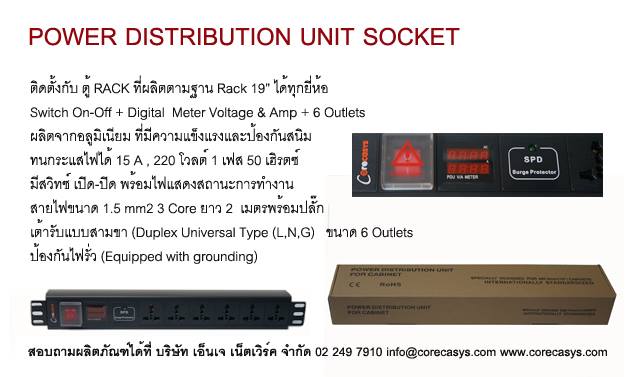
- Fits any brand of 19\" rack cabinet
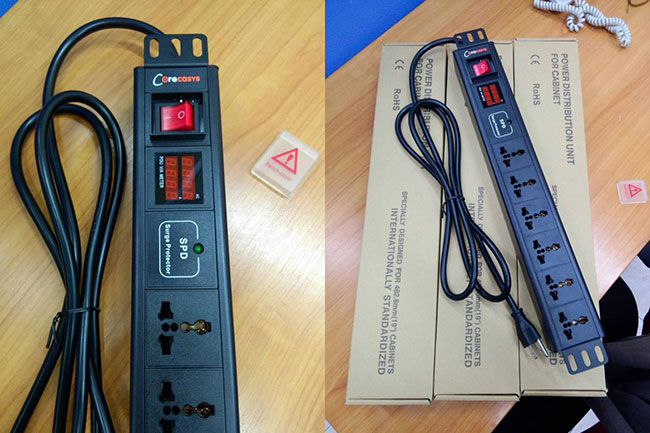
- Power switch with status indicator light
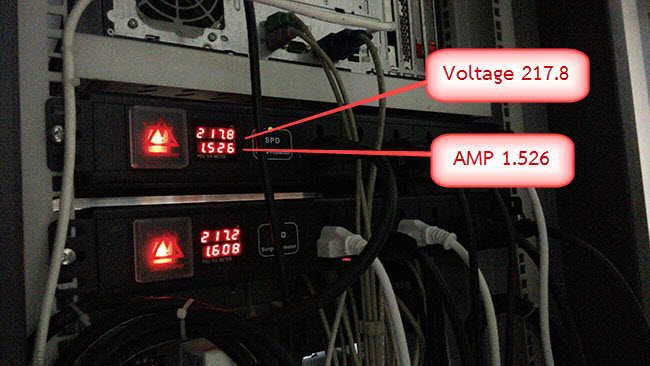
- Digital voltage & amp meters with easy 4-digit readout
- 6 outlets rated 15A, 220V
- 1.5 mm 3-core power cord, 2 meters long
- 3-pin universal outlets compatible with most plug types
A network cannot be reliable if power delivery is not standards-based
- Brief brownouts or outages that destabilize systems
- UPS runtime that is too short after a power cut
- Unexplained system hangs during normal use
These issues often come from conditions we cannot see. In my experience, power quality in Thailand is still uneven — dense village, market or crowded-community feeds may run below 220V, while other feeds run above 220V. Both are hazardous for electronics, especially network gear: undervoltage reduces stability, and overvoltage with surges can destroy equipment. I saw this clearly with CCTV: cameras plugged into local wall outlets at each point often flaked on and off despite camera, connector and adapter swaps. When those camera plugs were moved to a central UPS, stability improved dramatically and cameras rarely froze even after months or years of continuous use.
Voltage is the electrical potential; amperage measures current draw. Knowing both lets you calculate UPS watt/VA needs and choose the right UPS size. Per-device amp readings also let you balance loads across outlets, design a home or home-office datacenter more efficiently, and size a generator correctly.
VOLT x AMP = VA หรือ WATT นั่นเอง
Once you know real watt or VA draw, choose an appropriate UPS or generator model. With multiple UPS units in a rack, balance devices so each UPS carries a sensible load for full backup efficiency. In my experience, do not trust nameplate VA alone — almost no UPS brand lists a realistic VA (it is an ideal figure). A practical rule is nameplate VA × 0.6 for a usable estimate. See the sample Leonic UPS VA/Watt table below.
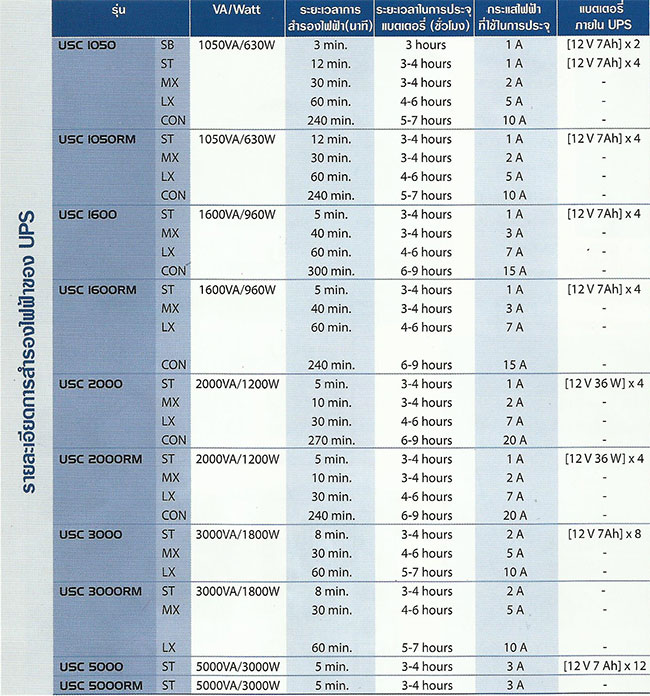
In the Leonic sample, model USC1600 lists 1600 VA but only 960 W. From inquiry and real use, Leonic tends to overstate VA while watt is the real deliverable power — typically about 0.6 × VA — because computer loads lose some energy to heat and cabling. When choosing a Leonic UPS model, use watt as the primary reference (this guidance is specific to Leonic sizing).
A strength of Leonic UPS is a separate controller that can connect to batteries sized for the runtime you need. Once you know the right UPS model for your load, you can order a custom battery pack for the backup duration you want — without buying an oversized all-in-one UPS. I have no commercial interest in the brand; I recommend it as a Thai brand. An Australian reseller I know said Leonic units hold resale value, which suggests the brand is accepted there as well.